
Top Signs You Need Garage Door Service — Don’t Ignore These
The number one thing we hear before an emergency call is, “It was making a noise for a few weeks, but it kept working.” In garage door mechanics, that noise has a name and a countdown clock attached to it. Many homeowners in Orange Park rationalize away minor issues, thinking, “It still works,” but that approach often leads to a much bigger, more inconvenient, and potentially dangerous problem down the road. We’re here to help you understand the specific mechanical “noises” and visual cues that signal your garage door needs attention, so you can make an informed decision before a small issue becomes a full-blown failure, especially when you’re trying to get out of your driveway on a busy Tuesday morning.
Decoding Garage Door Noises: What’s That Grinding Sound?
That grinding noise you’ve been hearing? It’s not just an annoyance; it’s a mechanical cry for help, often indicating worn-out rollers or tracks. In Orange Park, we frequently see issues stemming from dust and debris accumulating in the tracks, especially after windy spells that kick up sand from the nearby St. Johns River. When rollers struggle to move smoothly, they can chew into the metal of the track, creating that distinct grinding sound. This isn’t just about noise; it’s a sign of increased friction, which puts unnecessary strain on your garage door opener motor. Ignoring this can lead to premature opener failure, a much more expensive repair than replacing a few worn rollers and cleaning the tracks. We’ve seen this exact scenario play out in neighborhoods like Lakeside in Orange Park, where the combination of humidity and airborne particles can accelerate wear.
* Grinding or Scraping: Typically means rollers are damaged or the tracks are obstructed or bent.
* Squealing or Shrieking: Often indicates a need for lubrication on springs, hinges, and rollers, or possibly a failing torsion spring.
* Popping or Banging: Could point to a problem with the torsion spring system, like a broken spring or issues with the winding cone. This is a serious safety concern.
* Rattling: Usually signifies loose hardware – bolts, screws, or hinges that need tightening.
The Visual Inspection: Catching Problems Before They Cripen the Day
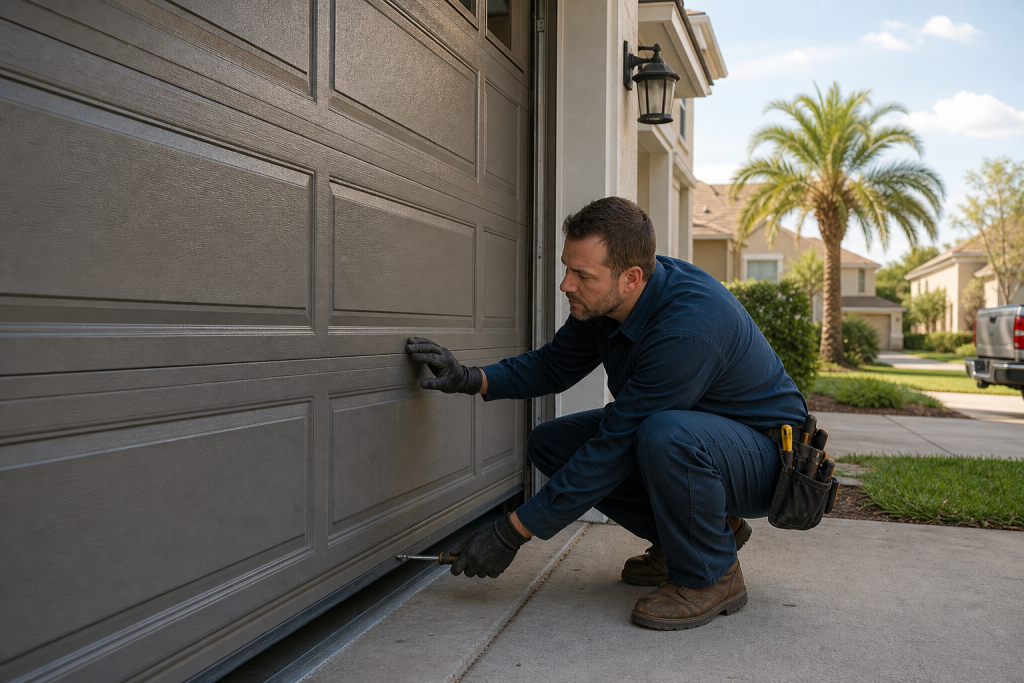
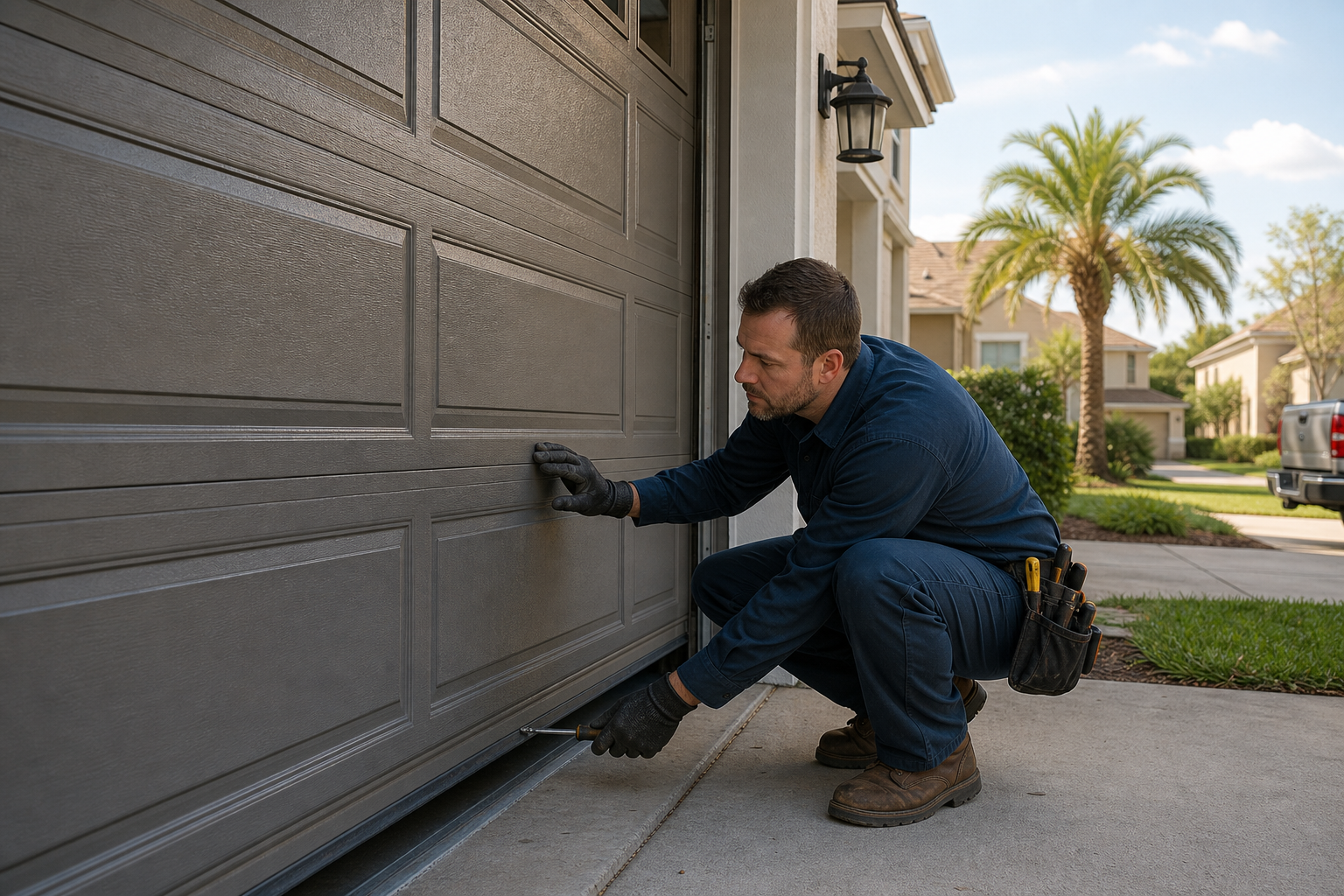
A quick 30-second visual inspection can often reveal developing issues that might otherwise go unnoticed until they cause a complete breakdown. We encourage all our Orange Park clients to take a moment and look at their garage door system regularly. First, check the springs. Are they intact? If you see a gap or a break in the torsion spring (the one above the door) or the extension springs (the ones along the horizontal tracks), do not attempt to operate the door. These springs are under immense tension and can cause serious injury. Next, examine the cables. Frayed or broken cables are a significant safety hazard, as they are critical for controlling the door’s descent. Look at the rollers – are they cracked, worn, or missing? Finally, check the tracks for any visible damage, dents, or obstructions. A door that looks “off” – leaning to one side, for instance – is a strong indicator of a problem with its balance or with the cables. These visual clues are your first line of defense against unexpected failures.
Performance Issues: When Your Garage Door Isn’t Moving Right
Beyond just noise, how your garage door *moves* is a critical indicator of its health. If you notice your garage door opening or closing slower than it used to, or if it stops mid-way and you have to manually assist it, something is definitely wrong. This sluggishness can be caused by several factors. In Orange Park, humidity can sometimes affect the lubrication of moving parts, leading to increased resistance. More commonly, it points to a strained opener motor, unbalanced door weight (often due to a failing spring system), or issues with the opener’s internal components. A door that feels excessively heavy when you manually lift it is a classic sign of a broken or weakening torsion spring. Conversely, if it feels too light or slams down, it indicates a loss of tension, likely from a cable issue or a damaged spring. We’ve seen doors in neighborhoods like Magnolia Bay in Orange Park that start to become noticeably heavier, and homeowners often don’t realize how much their springs are compensating until they fail.
* Slow Operation: Indicates increased friction, a strained opener, or an unbalanced door.
* Stopping Mid-Cycle: Suggests an obstruction, a weak opener, or a spring/cable problem.
* Jerky or Uneven Movement: Points to worn rollers, damaged tracks, or an issue with the opener’s drive mechanism.
* Door Slams Down: A dangerous sign that the springs or cables have lost tension.
Safety Hazards: Don’t Wait for a Catastrophe
Some garage door problems aren’t just inconvenient; they’re outright dangerous. The auto-reverse feature on your garage door opener is a critical safety mechanism designed to prevent the door from closing on a person, pet, or obstruction. If your door closes completely without reversing when it encounters an object, this feature has failed. This is a serious safety hazard that needs immediate attention. We’ve encountered situations in Orange Park where a malfunctioning auto-reverse has led to near-misses. Another major safety concern is a broken spring. Torsion springs, in particular, are under extreme tension. If one breaks, the door can become dangerously unbalanced, and the broken spring itself can fly off with significant force. Similarly, frayed or snapped cables are a direct threat, as they are essential for safely controlling the door’s movement. These aren’t issues to “wait and see” about; they require prompt professional intervention to ensure the safety of your household.
* Auto-Reverse Failure: The door closes fully without reversing when obstructed.
* Broken Torsion or Extension Springs: Visible breaks in the springs.
* Frayed or Broken Cables: Cables that are showing wear or have snapped.
* Door Unbalanced: The door leans heavily to one side or is difficult to lift manually.
When to Consider Replacement vs. Repair
While we’re always focused on repair where possible, sometimes the signs point towards a replacement being the more sensible and cost-effective solution, especially for older systems. If your garage door is showing multiple signs of wear and tear – for example, it’s making noises, operating slowly, and the panels themselves are showing significant rust or damage – it might be time for a new door. The same applies to openers that are more than 10-15 years old. Modern openers offer enhanced security features and greater reliability. We’ve seen many systems in older Orange Park homes that are simply past their prime. If a significant component like a torsion spring has failed on an otherwise aging door, the cost of repair combined with the remaining lifespan of the older door might not make sense. We’ll always give you an honest assessment of whether a repair will be a temporary fix or if a new installation is the better long-term investment for your home.
The 30-Second Visual Inspection Checklist
To help you quickly assess your garage door, here’s a simple checklist you can run through:
- Springs: Look for any gaps or breaks in the torsion spring (above the door) or extension springs (along the tracks).
- Cables: Check for fraying, snapping, or looseness.
- Rollers: Inspect for cracks, wear, or missing rollers.
- Tracks: Ensure they are clear of obstructions and not visibly bent or dented.
- Door Balance: Manually lift the door halfway. Does it stay put, or does it drift up or down?
- Opener: Listen for unusual noises and check the remote and wall button functionality.
The Bottom Line
Recognizing the signs that your garage door needs service isn’t about finding minor inconveniences; it’s about proactive maintenance and safety. From the subtle grinding noise of worn rollers to the critical safety hazard of a malfunctioning auto-reverse, each symptom tells a story about the health of your garage door system. By understanding these indicators, you can address issues before they escalate into expensive emergencies. If you’re in Orange Park and notice any of these signs, or if you’re simply unsure about your garage door’s condition, Total Garage Door Experts Orange Park offers free estimates. Don’t wait for a failure to happen at the worst possible moment. Call us today at (904) 467-1022.
Frequently Asked Questions
What does it mean if my garage door makes a grinding noise?
A grinding noise typically indicates that the rollers are worn out or the tracks are obstructed or damaged. This friction puts extra strain on your garage door opener.
Can I still use my garage door if a spring is broken?
No, you should absolutely not operate your garage door if a spring is broken. Broken springs are under immense tension and can cause serious injury or further damage to the door system.
How often should I lubricate my garage door?
We generally recommend lubricating the springs, hinges, and rollers of your garage door about twice a year, especially if you live in an area like Orange Park with significant humidity or dust.
What are the signs that my garage door opener needs replacing?
Signs include frequent malfunctions, loud or unusual noises from the motor, slow operation, or if the opener is over 10-15 years old, as newer models offer better security and efficiency.
Reviewed by David Johnson, Owner & Lead Technician at Total Garage Door Experts Orange Park, serving Orange Park since 2015.
Need Garage Door Help?
Call Total Garage Door Experts Orange Park — licensed & insured, here with fast after-hours help in Orange Park.
(904) 467-1022